
gesis report 02/24
Liebe Leser*innen, trotz der winterlichen Temperaturen steht der Frühling vor der Tür. Um den Blick in Richtung Sommer zu lenken, freuen wir uns, die diesjährige GESIS Summer School in Survey Methodology ankündigen zu können. Sie wird vom 24. Juli bis 16. August 2024 in Köln oder online stattfinden. Jetzt registrieren! Viel Vergnügen bei der Lektüre des Newsletters! Ihre Redaktion | Dear readers, despite the wintry temperatures, spring is just around the corner. In order to look towards summer, we are pleased to announce this year's GESIS Summer School in Survey Methodology. It will take place from July 24 to August 16, 2024 in Cologne or online. Register now! We hope you enjoy reading the newsletter! Your editorial team |
GESIS Summer School in Survey Methodology 2024 – Registration is Open!The Summer School will take place from 24 July to 16 August 2024. Courses will take place either at GESIS Cologne or online. Join lecturers and participants from all over the world and from many different fields in meeting in person and online to take part in Europe's leading summer school in survey methodology, research design, and data collection. There is no registration deadline, but places are limited and allocated on a first-come, first-served basis. For the full program, all course descriptions, and registration, use the navigation above or click here.
CEWS colloquium on gender relations and gender equality policy in academia16.04.2024, 2-3 pm: The Persistence of Sexism and Racism at Universities This talk will be in English and will take place online on Zoom. Content of this talk #MeToo, #BlackLivesMatter, and related social movements have over the last years continuously shown us that sexism and racism persist in our societies, our workplaces, and our universities and that we need to invest time, care, and resources into understanding how the sexism and racism that so many continuously experience is reproduced. Dr. Bontu Lucie Guschke discusses how sexist and racist harassment and discrimination are reproduced in workplaces at universities. Building on empirical research that integrates discourse and affect analysis to focus on the interplay of individual- and structural-level factors, it details how harassment and discrimination are facilitated in a context of in/ formality which prevails at universities, leading to a continuous reproduction of inequality. Open-Access-Tage 2024: DEAL, Diamond and beyond – Open Access zwischen Souveränität und Abhängigkeit – Call for ProposalsDie Open-Access-Tage 2024 finden vom 10.–12. September 2024 in der Kölner Südstadt an der TH Köln statt.
Die Anmeldung für die Open-Access-Tage 2024 öffnet voraussichtlich Ende Mai/Anfang Juni 2024.
| GESIS Training Workshops in May 202406/05-08/05 06/05-08/05 14/05-17/05 |
 | Neu erschienen: Search Engine Use for Health-Related Purposes: Behavioral Data on Online Health Information-Seeking in GermanyBachl, M., Link, E., Mangold, F., & Stier, S. (2024). Search Engine Use for Health-Related Purposes: Behavioral Data on Online Health Information-Seeking in Germany. Health Communication. https://doi.org/10.1080/10410236.2024.2309810. In dieser Studie wird auf Grundlage verknüpfter Web Tracking- und Befragungsdaten untersucht, wie sich die Menschen in Deutschland im Internet über Gesundheitsfragen informieren. Gegenüber bisherigen Studien auf Basis von Selbstauskünften in Befragungen eröffnen die Ergebnisse ein umfassenderes und differenziertes Bild des Informationsverhaltens im Internet. Out now: Search Engine Use for Health-Related Purposes: Behavioral Data on Online Health Information-Seeking in GermanyBachl, M., Link, E., Mangold, F., & Stier, S. (2024). Search Engine Use for Health-Related Purposes: Behavioral Data on Online Health Information-Seeking in Germany. Health Communication. https://doi.org/10.1080/10410236.2024.2309810. This study uses linked web tracking and survey data to examine how people in Germany obtain information about health issues on the Internet. Compared to previous studies using self-report measures from surveys, the results provide a more comprehensive and differentiated picture of information behavior on the Internet. |
 | Optimieren Sie Ihre Umfrage für die mobile Nutzung mit unserem Pretest-Service für Fragebögen auf Smartphones und TabletsDie zunehmende Verbreitung von mobilen Geräten wie Smartphones oder Tablets hat in den letzten Jahren die Zahl der Befragten, die Online-Fragebögen über diese Plattformen ausfüllen, kontinuierlich anwachsen lassen. Diese Entwicklung wirft wichtige Fragen auf hinsichtlich der Konstruktion und Gestaltung von Umfrageinstrumenten, die sowohl auf mobilen Geräten als auch auf PCs optimal funktionieren. Optimize your survey for mobile use with our pretest service for questionnaires on smartphones and tabletsIn recent years, the increasing use of mobile devices such as smartphones and tablets has led to a steady increase in the number of respondents completing online questionnaires via these platforms. This development raises important questions regarding the construction and design of survey instruments that work optimally on both mobile devices and PCs.
|
 | Neuer Journal-Beitrag thematisiert "Datensmog" und die Idee eines "Clean Information Act"Hołyst, J. A., Mayr, P., Thelwall, M., Frommholz, I., Havlin, S., Sela, A., Kenett, Y. N., Helic, D., Rehar, A., Maček, S. R., Kazienko, P., Kajdanowicz, T., Biecek, P., Szymanski, B. K., & Sienkiewicz, J. (2024). Protect our environment from information overload. Nature Human Behaviour. https://doi.org/10.1038/s41562-024-01833-8 Die Autor*innen thematisieren in ihrem Beitrag die zunehmende Informationsflut („information overload IOL“), die sie als eine Fülle von Daten verstehen, die die menschliche Fähigkeit übersteigt, sie zeitnah zu verarbeiten. Die IOL schränkt die menschliche Fähigkeit ein, Informationen zu bewerten und wirksame Entscheidungen zu treffen. New Journal article discusses "data smog" and the idea of a "Clean Information Act"Hołyst, J. A., Mayr, P., Thelwall, M., Frommholz, I., Havlin, S., Sela, A., Kenett, Y. N., Helic, D., Rehar, A., Maček, S. R., Kazienko, P., Kajdanowicz, T., Biecek, P., Szymanski, B. K., & Sienkiewicz, J. (2024). Protect our environment from information overload. Nature Human Behaviour. https://doi.org/10.1038/s41562-024-01833-8 In their article, the authors address the increasing information overload (IOL), which they understand as an abundance of data that exceeds the human ability to process it in a timely manner. IOL limits the human ability to evaluate information and make effective decisions. |
 | Kumulierte ISSP-Daten zu "Religion" jetzt verfügbar!ISSP 1991/1998/2008/2018 – “Religion I-IV – Cumulation” doi: 10.4232/1.14277. Das Internationale Sozialerhebungsprogramm (ISSP) hat eine Reihe von Umfragen durchgeführt, die die Einstellungen und Meinungen der Befragten zum Thema Religion beleuchten. Die Daten bieten weitreichende Möglichkeiten zur Beobachtung des sozialen Wandels und zur Vertiefung des Verständnisses der heutigen Gesellschaften, indem sie eine breite Palette von Merkmalen der individuellen Religiosität und die Einstellungen der Befragten zu Themen wie Homosexualität, Abtreibung, Geschlechterrollen, Einkommensumverteilung und Vertrauen in Institutionen untersuchen. Der neue kumulierte Datensatz deckt 38 Länder aus der ganzen Welt ab und ermöglicht kombinierte länderübergreifende und Trendanalysen über fast drei Jahrzehnte. Weitere Informationen und Daten Cumulated ISSP Data on “Religion” out now!ISSP 1991/1998/2008/2018 – “Religion I-IV – Cumulation” doi: 10.4232/1.14277. The International Social Survey Programme (ISSP) has conducted a series of surveys shedding light on respondents’ attitudes and opinions related to Religion. The data offer great opportunities for monitoring social change and deepening the understanding of contemporary societies by looking at a wide range of characteristics of individual religiosity and respondents’ attitudes on issues such as homosexuality, abortion, gender roles, income redistribution, and trust in institutions. The new cumulated dataset covers 38 countries from across the world and allows combined cross-national and trend analyses over almost three decades. More information and data download are available on the GESIS webpage: https://www.gesis.org/en/issp/data-and-documentation/religion/cumulation |
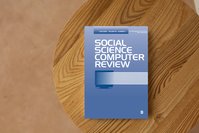 | Neu erschienen: Analysis of Web Browsing Data: A GuideClemm von Hohenberg, B., Stier, S., Cardenal, A. S., Guess, A. M., Menchen-Trevino, E., & Wojcieszak, M. (2024). Analysis of Web Browsing Data: A Guide. Social Science Computer Review, 0 (0). https://doi.org/10.1177/08944393241227868 Die Verwendung von Browsing-Daten auf individueller Ebene, d. h. die Aufzeichnungen der Besuche einer Person bei Online-Inhalten über einen Desktop- oder mobilen Browser, ist für Sozialwissenschaftler*innen von zunehmender Bedeutung. Browsing-Daten haben Eigenschaften, die viele Fragen für die statistische Analyse aufwerfen, doch bisher gibt es nur wenige praktische Anleitungen für den Umgang mit ihnen. Out now: Analysis of Web Browsing Data: A GuideClemm von Hohenberg, B., Stier, S., Cardenal, A. S., Guess, A. M., Menchen-Trevino, E., & Wojcieszak, M. (2024). Analysis of Web Browsing Data: A Guide. Social Science Computer Review, 0 (0). https://doi.org/10.1177/08944393241227868 The use of individual-level browsing data, that is, the records of a person’s visits to online content through a desktop or mobile browser, is of increasing importance for social scientists. Browsing data have characteristics that raise many questions for statistical analysis, yet to date, little hands-on guidance on how to handle them exists. |
 | E-Mail wird nicht richtig dargestellt? Jetzt im Browser anschauen! Eine Abbestellung des Newsletters "gesis report" ist jederzeit über diesen Link möglich: https://lists.gesis.org/mailman/listinfo/gesis-newsletter Sie können uns auch gerne eine E-Mail senden: gesisreport@gesis.orgDie Datenschutzhinweise von GESIS können Sie über folgenden Link einsehen: https://www.gesis.org/institut/datenschutz/ Display problems? No images? Open the newsletter in your browser! You can unsubscribe from the newsletter "gesis report" at any time via this link: https://lists.gesis.org/mailman/listinfo/gesis-newsletter You can also send us an e-mail: gesisreport@gesis.org The GESIS data protection information can be viewed via the following link: https://www.gesis.org/institut/datenschutz/ |
Folgen Sie uns/ Follow us!
 |
|  |  |  |